by Robert Taft, S.J.
In this essay I would like to offer some reflections on the dynamics of modern liturgical renewal, especially in its earlier theoretical phases anterior to Vatican II and in its aftermath. I have always been intrigued by the interplay of history and tradition, and how they have been employed, indeed exploited, for the purposes of promoting ecclesial agendas. I shall concentrate specifically on how my own area of specialization, eastern liturgy, has been exploited in the modern western liturgical movement and the reforms of the Roman rite leading up to and consequent to the Second Vatican Council.
Since I am an historian, and historians tell stories, let me begin with one. The periodical Petrayki Ekklesia,
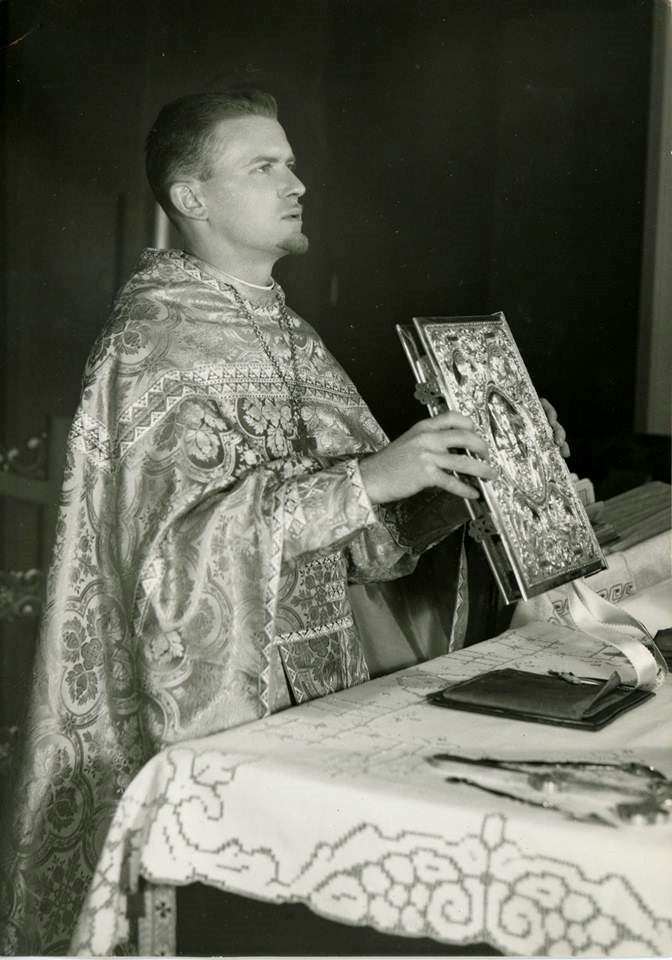
official organ of the Greek Orthodox Eparchy of Piraeus, edited by the Protosyncellus of the diocese under Metropolitan Kallinikos, whose name is on the masthead, published in March, 1977 a photo of a Greek Orthodox priest celebrating the Orthodox eucharist versus populum at an altar placed on the floor of the nave in front of the traditional iconostasis of the enclosed Byzantine sanctuary. The accompanying blurb states: ‘The liturgy was celebrated in the center of the church in the ancient way (sto kentro tou Naou kata ton archaiprepi tropo)” (1)
More important than this fact is the method of argument: startling liturgical innovation unheard of in any eastern tradition is justified by appeal to ancient tradition–just as was done in the western liturgical movement to support the versus populum position. That the facts may not justify this appeal to the past is irrelevant, just as is totally irrelevant the appeal to the past among those in the Catholic west today who controvert the versus populum position by trying to show it was not in fact as traditional in antiquity as its promoters would claim.
In either case, the facts are beside the point. The dynamics involved have nothing to do with conclusions from liturgical history. Rather, it is a question of seeking precedents in earliertradition for what one has already decided to do. We are dealing, in short, with the strategies reformers employ to claim authority for their views.






Add Comment أضف تعليق